
Best Curling Irons for Long Hair, Fine Hair and Easy Styling
As an Amazon Associate, SizeThemUp earns from qualifying purchases.
A curling iron can make the same haircut look completely different, but one tool rarely suits every length, texture and curl goal. An iron that makes polished ringlets may be frustrating when you want loose movement; a wide wand that works beautifully on long hair can be difficult to maneuver around a short bob. This guide compares traditional clamp irons, automated curlers, professional marcel designs and interchangeable wands. We focus on how each design changes the styling experience, not claims that one expensive iron works miracles.
If you are looking for the best curling iron for fine hair, long layers, or beginner-friendly waves, start by considering temperature control, barrel diameter, grip, cord and handling. The options below emphasize different real-world routines so that you can choose a tool that makes sense for the way you style.
Quick Picks
T3 SinglePass Curl X Extra-Long Curling Iron — best overall for longer hair; CHI Spin N Curl Rotating Curling Iron — best for automatic curling; ghd Chronos Curve 1.25-Inch Curling Wand — best premium wand for loose waves; Conair Double Ceramic 1¼-Inch Curling Iron — best inexpensive loose-wave iron; Hot Tools Pro Artist 24K Gold Marcel Curling Iron — best for experienced manual styling.
How These Curling Irons Were Selected
We compared published specifications, hair-length suitability, styling mechanisms, professional features, and the practical tradeoffs described by independent beauty editors. This guide does not claim hands-on tests by SizeThemUp. Barrel diameter, included accessories and package configurations may differ between variants. Always consult the exact product page and manufacturer instructions before ordering or styling.
Curling Irons Compared
One buying tip: If you can only choose one barrel size, a one-inch iron is usually a more flexible starting point than a very narrow or very wide barrel; adjust based on hair length and the finish you want.
Curling Iron Barrel Size Guide: Which Size Makes Which Curl?
Barrel size changes the shape of the style, while your hair length, section size, and finishing technique influence how the curl actually looks. The guide below is a starting point rather than a rule: curls loosen as they cool, are brushed out, or settle during the day.
Two measurements matter: diameter determines curl width; barrel length determines how much long hair fits comfortably along it. An extra-long 1-inch barrel does not create a larger-diameter curl than an ordinary 1-inch barrel.
General barrel-size guidance informed by Consumer Reports’ curling iron guide.
Individual Reviews
1. T3 SinglePass Curl X Extra-Long Curling Iron — Best overall for longer hair

A long barrel matters most when you have more hair than a standard iron can comfortably wrap. The T3 SinglePass Curl X is appealing because it combines an elongated ceramic styling surface with a conventional spring clamp, rather than demanding that you learn a new rotating mechanism. Its range of heat settings also makes it useful for households with different hair textures. For a curling iron for long thick hair, capacity on the barrel and smooth release may matter more than the highest advertised temperature. The tradeoff is cost: this is a substantial purchase compared with basic drugstore irons. It also takes more space in a bag or drawer. If you mostly curl short sections or only style occasionally, a shorter and less expensive iron might do the same job. If you frequently style hair past your shoulders, though, the extra working length can make each pass more manageable.
Best for: People with longer hair who want conventional clamp control and room to wrap full-length sections.
2. BaBylissPRO Nano Titanium Spring Curling Iron — Best for defined, salon-style curls

The BaBylissPRO Nano Titanium Spring model is a traditional clamp iron geared toward people who want crisp, controlled curls rather than a fully automated device. Titanium barrels are popular in professional-style tools for fast response, although the right temperature still depends on your hair condition and texture. With this type of iron, section size and clamp placement make a bigger difference than simply turning the dial higher. It is a particularly plausible choice for thicker hair that does not style easily with lower-power tools, provided you use suitable heat protection and avoid excessive exposure. An important purchasing detail is barrel diameter: the product family is available in several sizes, and those sizes produce noticeably different shapes. Check the exact one you select. Beginners who want a lower learning curve may be happier with a guided or rotating curler.
Best for: Confident users seeking traditional, defined curls with a titanium spring-clamp design.
3. Hot Tools Pro Artist 24K Gold Extended Barrel Curling Iron — Best for reaching long sections

An extended-barrel curling iron can simplify a common frustration: hair slipping off the end of the barrel when you try to wrap long sections. This Hot Tools Pro Artist model uses the brand’s recognizable gold-finish styling surface in an elongated configuration. It is worth comparing with the T3 if you prefer a more traditional feel and want to focus on defined curls rather than automatic styling. The longer styling area is useful for working from mid-length to ends without compressing strands into tight overlapping layers. On the other hand, an extra-long barrel will not automatically make styling gentler. You still need to select sensible heat, work in manageable sections, and release each curl carefully. Check which diameter the linked listing covers because the brand sells multiple related versions. It may be excessive for a short bob or someone who mostly styles bangs.
Best for: Long-haired users who want more working barrel length without switching to an automatic curler.
4. CHI Spin N Curl Rotating Curling Iron — Best for automatic curling

If wrapping hair around an exposed hot barrel is what makes curling frustrating, an automatic chamber can be an easier route. The CHI Spin N Curl draws a prepared section into its curling area and handles much of the winding action for you. This makes it an interesting automatic curling iron for beginners who prefer repeatable curls over freehand styling. It is not completely effortless: the amount of hair you feed into the chamber, how smoothly it is brushed, and the direction selected still matter. Large or tangled sections can make the process awkward, so follow the device instructions carefully. The enclosed design is also bulkier than a slim wand, which may matter for travel. For someone who likes improvising loose beach waves, an open barrel offers more control; for someone who wants a guided routine, the CHI is compelling.
Best for: Beginners who prefer the curling mechanism to wrap each section rather than hand-twisting a wand.
5. ELLA BELLA 1 Inch Ceramic Curling Iron — Best for straightforward temperature control
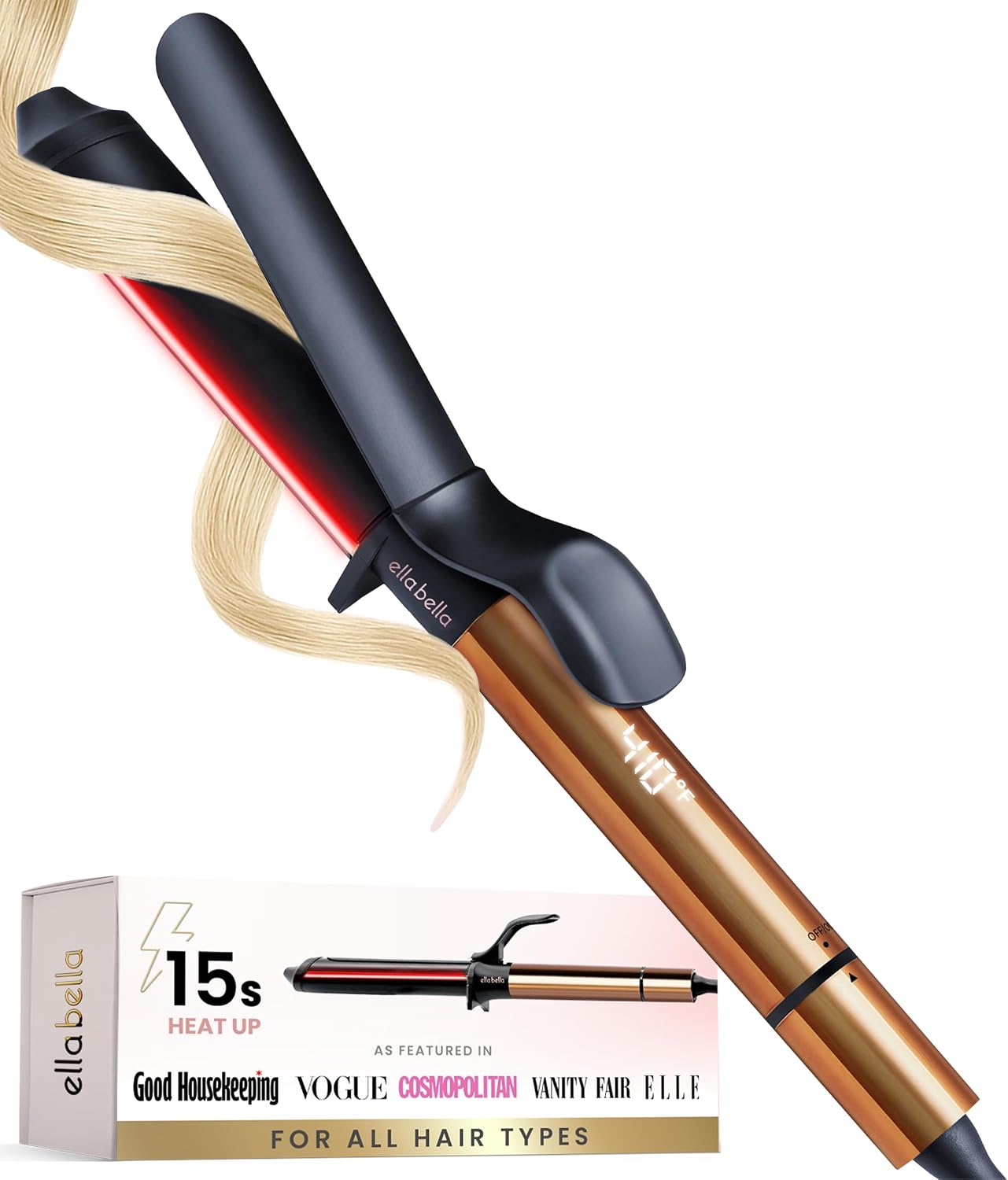
A one-inch barrel is a sensible middle ground when you want both structured curls and brushed-out waves. ELLA BELLA’s ceramic curling iron adds a digital temperature readout, making it easier to return to a familiar setting instead of guessing from an unmarked dial. That is valuable when different members of a household style their hair or you need to start with a gentler setting for fine strands. The listed accessory bundle also makes this attractive as a first dedicated curling iron, but confirm what is actually included in the current package. A curling iron for fine hair should offer controlled, moderate heat and a smooth release; it does not need to reach the hottest setting to work. The principal limitation here is flexibility: you cannot switch between a narrow wand and a large barrel without buying another tool. For occasional styling, that simplicity may be an advantage.
Best for: First-time buyers wanting a familiar one-inch clamp iron with a visible temperature setting.
6. ghd Chronos Curve 1.25-Inch Curling Wand — Best premium wand for loose waves
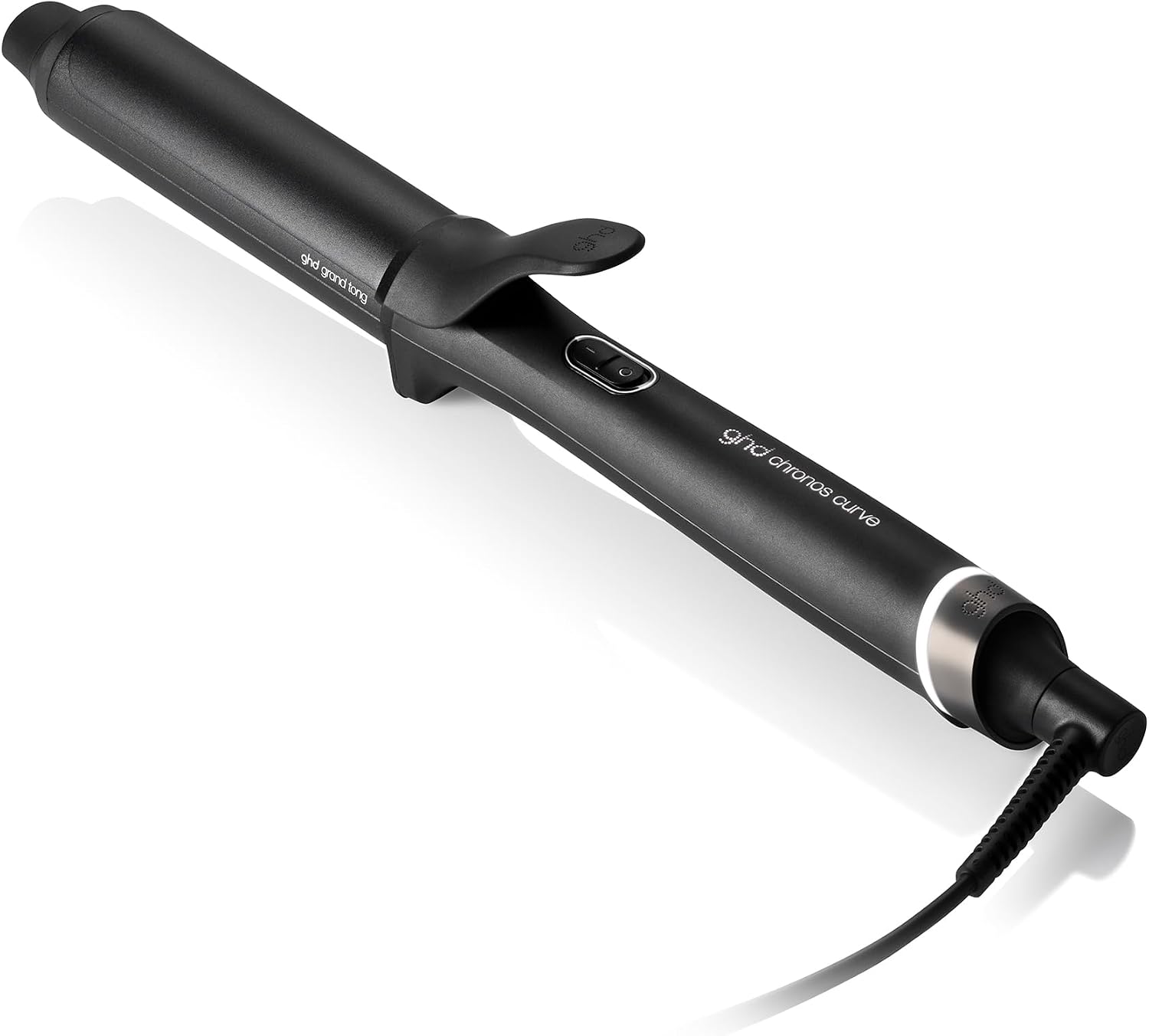
People seeking relaxed movement rather than tightly defined ringlets often prefer a larger clamp-free wand. The ghd Chronos Curve 1.25-inch model targets that look with a broader barrel that encourages sweeping, loose waves. Because there is no spring clamp, you control the wrap and release directly, which can avoid a clamp crease but requires deliberate hand placement. A heat-resistant glove may be helpful even if you have used irons for years. This is a more specialized choice than a one-inch general-purpose curler: it works best when your hair is long enough to achieve a full wrap and when your goal is texture and movement. Short hair and tight curls are not its natural strengths. The premium price also makes it worth asking whether your styling routine genuinely benefits from this design rather than a simpler, lower-cost wand.
Best for: Medium-to-long hairstyles aiming for polished, loose waves instead of tight ringlets.
7. PATTERN The 3-in-1 Interchangeable Curling Iron — Best for switching curl shapes

An interchangeable styling system is most useful when your preferred curl shape changes from week to week. PATTERN’s 3-in-1 concept is aimed at giving you different curl results without keeping several complete irons in the drawer. The benefit is versatility: a tighter curl for one occasion and a wider, more relaxed look for another. That said, buying a system is not automatically more convenient than buying one great barrel. You must store the attachments, allow hot parts to cool before changing them, and learn which option best fits your hair length. It makes the strongest case for someone who already enjoys styling and knows they will genuinely use the alternatives. A beginner whose goal is only an easy everyday wave may find a single clamp iron more practical and less costly. Check the current package contents before deciding.
Best for: Frequent stylers who genuinely switch between multiple curl sizes and finishing looks.
8. Conair Double Ceramic 1¼-Inch Curling Iron — Best inexpensive loose-wave iron

Not everyone needs salon-priced equipment to curl their hair twice a week. The Conair Double Ceramic 1¼-inch iron is a practical starting point for relaxed waves and soft volume on medium-to-long hair. Its wider barrel makes looser shapes than a narrow curler, and the familiar spring clamp makes the process intuitive for someone who already knows traditional curling irons. For a curling iron for loose beach waves, barrel diameter and how you brush out the finished curls are often more decisive than expensive marketing features. This is a cost-conscious option with a range of heat settings, but the wider barrel is less appropriate for shorter hair and small, tight ringlets. The product line has several sizes, so verify that you choose the 1¼-inch version linked here. If you curl daily, you may prefer the feel and control of a premium handle.
Best for: Occasional users who want simple, affordable loose curls on medium-to-long hair.
9. Hot Tools Pro Artist 24K Gold Marcel Curling Iron — Best for experienced manual styling

A marcel iron is a different kind of tool from the standard spring-clamp model most home users recognize. Its manually operated handle gives an experienced stylist more direct control over opening and closing the barrel, which is helpful when changing tension and curl direction quickly. That flexibility can make the Hot Tools Pro Artist 24K Gold Marcel attractive for advanced home stylists or professionals who already understand the technique. For a first curling iron, however, the tradeoff is substantial: the handle movement can be awkward, and controlling it while keeping the heated barrel away from your scalp takes practice. It is a poor choice for anyone who wants simple automatic curls. Compare the exact barrel diameter with the look you want, and be prepared to practice with the iron turned off before styling. The added control is worthwhile only if you will use it.
Best for: Experienced stylists comfortable operating a manually controlled marcel handle.
10. Remington Shine Therapy Tapered Curling Wand — Best for varied curl widths

A tapered curling wand creates a different silhouette from a constant-width clamp iron. With the Remington Shine Therapy tapered model, where you position each section along the barrel influences whether the curl is tighter or more relaxed. That makes it a flexible option for users who enjoy intentionally varied shapes rather than identical ringlets. The narrower end is especially useful around shorter face-framing sections, although you must keep fingers clear of the exposed hot tip. The wand format also avoids a clamp crease but puts the responsibility for wrap tension and release on you. If you are choosing a curling wand for short hair or layers, careful sectioning and moderate heat matter more than maximum temperature. This is not the obvious choice for large, loose waves across very long hair; in that case, a larger uniform barrel may be faster.
Best for: People with layers who want varied curl sizes from a single tapered wand.
How to Choose a Curling Iron
Match barrel diameter to your hair and curl goal
Smaller barrels generally make tighter shapes, and larger ones create more relaxed curves. When hair is very short, a wide barrel may not get a full wrap; for long hair, a longer styling surface can help keep a section neatly spaced. A one-inch curler is an adaptable starting point for medium hair. A 1¼-inch or larger barrel is often better suited to longer lengths and broader waves. Remember that curl appearance also changes when you brush out the finished style.
Pick a tool type you will actually use
Spring-clamp irons are familiar and versatile but may leave a crease if you clamp too firmly. Curling wands allow more natural-looking movement and different wrap patterns but have an exposed hot surface. Automatic chamber devices reduce some of the manual wrapping process but require a particular section size. Marcel irons give expert stylists refined tension control but have a steeper learning curve. Interchangeable sets make sense for people who enjoy many styles; for occasional styling, one simpler iron can be the better investment.
Choose controllable heat over maximum heat
Fine, color-treated, dry or damaged hair should not automatically be subjected to the hottest setting. Start with the lowest setting that can create the style, use an appropriate heat protectant, and follow manufacturer timing guidance. A digital temperature display may make a routine more consistent. A curler with a safe stand, cool tip or automatic shutoff can improve usability, but never assume a safety feature exists without checking the exact variant.
Consider the handle, cord and routine
An extra-long barrel is helpful only if you have room to maneuver it. The weight and handle shape matter when styling the back of your head, while a swivel cord is especially useful when alternating curl direction. If you travel often, verify voltage support rather than assuming an iron will work internationally. Always unplug and cool a tool before packing it. For families sharing one iron, clearly labeled adjustable heat can be more useful than specialty barrel coatings.
Prioritize maintenance and safe storage
Product buildup on hot tools can interfere with smooth release. Allow the device to cool fully and wipe it using the manufacturer’s recommended method; never submerge a styling iron. Store accessories and cords without crushing or tightly bending them. Keep the iron away from children, pets, and wet surfaces. Regular inspection of the cord and plug is more important than cosmetic finish.
How to Curl Hair Without Making Common Mistakes
The right tool helps, but technique influences whether the finished style is a loose wave, a uniform curl, or a tight ringlet. These steps work as a general starting routine for a conventional curling iron or wand; an automatic chamber curler needs the specific loading instructions supplied with the device.
- Start with completely dry, detangled hair. Apply a heat-protectant product according to its directions and allow it to dry if required. Never clamp a conventional hot iron onto wet strands unless the manufacturer explicitly states the tool is designed for that use.
- Divide hair into manageable sections. Clip up top layers so you can work from underneath. Smaller sections are easier to heat evenly; oversized sections may cause you to make repeated passes.
- Start at a conservative heat setting. Fine, bleached, color-treated or fragile hair calls for particular care. Dermatologists advise low heat and minimizing the time a curling iron touches hair; higher heat is not automatically a better choice.
- Wrap or clamp with control. With a clamp iron, avoid pinching ends into a sharp bend. With a wand, keep fingers clear of the hot barrel and follow the included safety instructions. Keep heated surfaces away from the scalp and ears.
- Release and let the curl cool. Avoid pulling or brushing a just-formed curl while it is still hot. After cooling, gently separate for softer movement or leave it intact for a more defined finish.
- Finish without unnecessary reheating. If the style looks too tight, loosen it with your fingers instead of making another heat pass. Unplug the tool and let it cool fully on a safe surface before storage.
Safety note: Heat protection can reduce some styling stress but does not make frequent high-heat styling risk-free. The American Academy of Dermatology recommends limiting hot-tool contact and heat exposure to help protect hair.
Which Curling Tool Type Suits Your Routine?
Spring-clamp iron: A good first choice for classic curls and controlled ends. Easier for many beginners to position, though pressing the clamp too firmly can leave a crease.
Clamp-free wand: Useful for relaxed, less uniform waves. Gives you freedom to vary direction and tension, but demands careful handling of exposed heat.
Automatic chamber curler: Best considered when manual wrapping is difficult. Consistency can improve once you understand section size and placement, but the chamber limits how much hair can be fed into each curl.
Marcel iron: More suited to practiced users who want precise manual clamp movement. It is not a shortcut for somebody still learning basic curling technique.
Interchangeable-barrel system: Makes sense if you regularly create different styles. Compare the actual attachment shapes and your storage needs before paying for versatility.
Common Curling Problems and Practical Fixes
Try smaller sections, allow curls to cool before separating, and consider a styling product appropriate for your hair. Do not solve poor hold by repeatedly raising heat.
Check that the spring clamp is not sharply pinching the tips, and wind the ends smoothly. A clamp-free wand removes the clamp-crease issue but changes the handling technique.
Detangle before styling, reduce section size and release without tugging. For a chamber device, follow its instructions for reversing or clearing a stuck section; do not pull against the mechanism.
Use a wider barrel when suitable for your hair length, wrap more loosely, and soften the result only after cooling.
Consider a smaller diameter or a tool with a shorter usable surface. There must be enough length to form the desired bend safely.
Frequently Asked Questions
A spring-clamp iron with a moderate barrel and clearly labeled heat settings is a practical place to start. If manual wrapping feels difficult, consider an automatic curler such as the CHI Spin N Curl, but follow its sectioning instructions.
Longer hair often benefits from an extended barrel, while thick hair may demand more careful sectioning and controlled heat. T3 SinglePass Curl X and the Hot Tools extended-barrel design are worth comparing for usable length, grip and heat range.
Either material can style effectively, but temperature control and technique are more important than the label alone. For fragile hair, start lower and limit repeated heat passes.
Try a larger diameter barrel, leave a little length out at the ends, alternate the direction of curls, and let each section cool before gently separating. Do not use excessive heat to compensate for large sections.
A standard clamp iron gives beginners a fixed way to hold the ends, while a wand avoids clamp creases but requires more awareness of the exposed hot barrel. Ease depends on whether you prefer guided holding or freehand wrapping.
Use a conventional heated curling iron only on completely dry hair, unless that specific model is designed and labeled for wet use. Damp strands are more vulnerable to heat stress. Read the manufacturer’s instructions before styling.
Hand position and wrapping direction are often the difference. Work with similar section sizes on each side, and decide whether curls should face toward or away from your face before beginning.
No. Barrel length creates more space for wrapping long strands, whereas diameter controls the curl’s approximate width. Check both specifications when comparing tools.
Final Verdict
For long hair and an everyday styling routine, T3 SinglePass Curl X is a strong starting point. If you want hands-off winding, compare the CHI Spin N Curl. For relaxed waves on a budget, consider the Conair Double Ceramic. Experienced stylists who value manual control may prefer the Hot Tools Marcel.
Shop the standout picks: T3 SinglePass Curl X for long hair; CHI Spin N Curl for automatic curling; Conair Double Ceramic for value; Hot Tools Marcel for experienced users.

