Best Automatic Pet Feeders for Busy Households, Two Cats and Remote Meals
A cat that begs at dawn and a dog that gulps dinner in seconds need very different feeding solutions. A timer can keep meals regular, but it cannot tell which pet ate the food; a camera can show the bowl, but it cannot prevent food stealing. The best automatic pet feeders balance reliable dispensing, usable portions, cleaning and backup power before adding smartphone features. This guide separates simple dry-kibble timers from connected dispensers, shared two-bowl units and selective-access systems so you can match the machine to your household rather than buying the longest feature list.
We focus on everyday routines: choosing an automatic cat feeder with Wi-Fi for remote schedule changes, deciding whether a camera is worthwhile, and managing two pets with different eating habits. Every option below has a different reason to consider it. No feeder replaces fresh water, daily observation, or a trusted caregiver during longer absences.
Quick Picks
- PETLIBRO Granary 5L Wi-Fi Feeder — remote schedule changes
- oneisall Dual-Bowl 5L Cat Feeder — two cats at one station
- PETLIBRO One RFID Feeder — selective feeding access
- PetSafe Smart Feed 2.0 — large hopper and slow feed
- PETLIBRO Granary Camera Feeder — camera view of meals
How We Selected These Feeders
We compared ten identifiable dry-food dispensers by meal scheduling, hopper capacity, app reliance, backup power, bowl arrangement, cleaning and the specific pet behavior each design addresses. Product details come from maker documentation and marketplace listings; we did not conduct hands-on testing or independently measure dispensing precision. Current offers may differ from the configurations described here.
Automatic Pet Feeders Compared
Buying tip: Run several full feeding cycles with your pet’s actual kibble before relying on any programmed portion.
1. ANDOLL HOME 4L Programmable Feeder — Simple timed meals

Best for: Simple timed meals. Notable design: 4 L; voice recording.
The ANDOLL HOME unit is a practical entry point when the main problem is keeping breakfast and dinner on a dependable clock. Its listed 4-liter hopper and recorded mealtime call are more useful than flashy phone features for a household that prefers programming at the machine. This is a dry-food dispenser, not a replacement for checking that the bowl actually received food. The portion setting is a mechanical dispensing instruction rather than a promise of a particular calorie count; measure several test servings using your own kibble before relying on it.
Local scheduling avoids dependence on an app for everyday adjustments. A voice call may be familiar to a pet, but it cannot prevent a second animal from taking the food. Keep the bowl accessible and the outlet clean.
Before purchase, check the current listing for the precise included accessories and any limitations affecting your pet’s food size. Introduce changes gradually, and monitor whether your animal is comfortable using the bowl rather than assuming a successful dispensing cycle equals a successful meal.
2. PETLIBRO Granary 5L Wi-Fi Feeder — Remote schedule changes

Best for: Remote schedule changes. Notable design: 5 L; dual-band Wi-Fi.
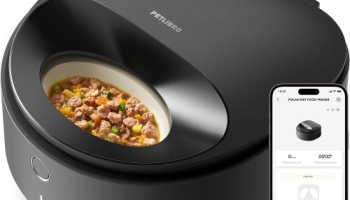
The Granary Wi-Fi model makes sense when a workday changes unexpectedly and you want to adjust a dry-food schedule from a phone. Its 5-liter reservoir, app-based feeding log and low-food monitoring distinguish it from a basic timer. That does not mean a notification proves a cat ate the dispensed food. For a household seeking an automatic cat feeder with Wi-Fi, the real benefit is control over timing, not a substitute for an in-person check. Confirm your home network, account access and whether another household member can administer the schedule.
An internet-connected appliance adds service and router dependencies to an otherwise simple chore. Recent reports of smart-feeder service disruptions are a reminder to test offline behavior and arrange backup care when away.
Before purchase, check the current listing for the precise included accessories and any limitations affecting your pet’s food size. Introduce changes gradually, and monitor whether your animal is comfortable using the bowl rather than assuming a successful dispensing cycle equals a successful meal.
3. PETLIBRO Granary 3L Timed Feeder — No-app household

Best for: No-app household. Notable design: 3 L; timed portions.
The smaller 3-liter Granary is a useful contrast to the connected version. It aims to make scheduled dry-food portions available without asking every family member to learn a mobile app. Its locking food storage and recorded meal call help keep the routine predictable, while the smaller hopper can suit one cat or a compact kitchen. It is a strong candidate for shoppers asking about a cat feeder without Wi-Fi because the controls are on the appliance itself. Check the exact kibble diameter and run several test cycles before assuming every piece will dispense consistently.
A smaller reservoir may need more frequent refilling, which is sometimes an advantage for freshness. It does not offer a camera, and no timer can determine whether the intended pet was the one eating.
Before purchase, check the current listing for the precise included accessories and any limitations affecting your pet’s food size. Introduce changes gradually, and monitor whether your animal is comfortable using the bowl rather than assuming a successful dispensing cycle equals a successful meal.
4. IMIPAW Timed Dry-Food Feeder — Basic portion scheduling

Best for: Basic portion scheduling. Notable design: Timed meals; backup power.
IMIPAW’s timed feeder targets a common frustration: feeding at the same hour even when people leave early for work. Its listing describes a programmable dry-food schedule, desiccant storage and dual power options. Rather than assuming the portion setting equals a fixed weight, weigh a few actual servings of your cat’s food and adjust the schedule with that result. This model belongs in a comparison of automatic pet feeders with battery backup because backup power can protect the routine during a short interruption, provided the batteries are installed and healthy.
The control panel is more important than a fashionable app if several people will use the feeder. Keep instructions nearby for changing clocks and schedules, and check whether the hopper, outlet and bowl are easy to clean.
Before purchase, check the current listing for the precise included accessories and any limitations affecting your pet’s food size. Introduce changes gradually, and monitor whether your animal is comfortable using the bowl rather than assuming a successful dispensing cycle equals a successful meal.
5. oneisall Dual-Bowl 5L Cat Feeder — Two cats at one station

Best for: Two cats at one station. Notable design: 5 L; two bowls.
The oneisall model is designed around a household with two cats: a single dispenser routes kibble toward two bowls. That makes it more convenient than placing two separate machines in a small room, and the 5-liter reservoir provides shared dry-food storage. It is not a true individualized feeding system. A confident cat can still approach the other bowl, and the split may need checking with different kibble shapes. For anyone searching for an automatic feeder for two cats, observe a few meals together before trusting a shared station when the pets have different diets.
The paired stainless bowls are a useful cleaning feature, but portion balance and pet behavior matter more than the total hopper capacity. Cats requiring separate prescriptions or strict calorie control may need physically separated feeders.
Before purchase, check the current listing for the precise included accessories and any limitations affecting your pet’s food size. Introduce changes gradually, and monitor whether your animal is comfortable using the bowl rather than assuming a successful dispensing cycle equals a successful meal.
6. VOLUAS 4L Programmable Feeder — Straightforward daily routine

Best for: Straightforward daily routine. Notable design: 4 L; local controls.
The VOLUAS 4-liter feeder is another choice for owners who would rather set a clock than manage an account. Its programmable mealtimes and voice-message feature are aimed at keeping a predictable dry-food routine. The advantage over an ordinary gravity container is that it dispenses at scheduled intervals instead of leaving the whole day’s food continuously available. If your pet grazes slowly, however, a timed release may simply build up in the bowl. The right question is whether timed feeding fits the animal’s eating behavior, not whether the hopper is the largest in the store.
For smaller kitchens, check the footprint as well as the stated food capacity. Use a kitchen scale to establish portions, and keep a human check-in routine during extended absences.
Before purchase, check the current listing for the precise included accessories and any limitations affecting your pet’s food size. Introduce changes gradually, and monitor whether your animal is comfortable using the bowl rather than assuming a successful dispensing cycle equals a successful meal.
7. PETLIBRO One RFID Feeder — Selective feeding access

Best for: Selective feeding access. Notable design: RFID tag access; controlled bowl.
A tag-controlled feeder solves a different problem from a standard timer: one cat may need access to food that another should not steal. PETLIBRO’s RFID system uses a compatible tag to manage access to the feeding area. That makes it worth considering for multi-cat homes with competing appetites, though the system still needs careful introduction and supervision. It should not be described as medical-grade dose control. Before ordering, confirm which tags and accessories are included and whether the intended cat will comfortably wear the required identifier.
An automatic cat feeder for multiple cats does not necessarily separate diets. This selective-access approach is more targeted, but it costs more and adds hardware that must stay paired and maintained. Discuss therapeutic diets with your veterinarian.
Before purchase, check the current listing for the precise included accessories and any limitations affecting your pet’s food size. Introduce changes gradually, and monitor whether your animal is comfortable using the bowl rather than assuming a successful dispensing cycle equals a successful meal.
8. PetSafe Smart Feed 2.0 — Large hopper and slow feed

Best for: Large hopper and slow feed. Notable design: 24 cups; slow-feed mode.
PetSafe’s Smart Feed 2.0 suits owners who want a larger reservoir and adjustable delivery pace. The listed 24-cup capacity is notably different from compact cat-only units, and its slow-feed setting spreads a meal over time rather than releasing everything at once. That can be helpful for a fast eater, although feeding behavior and medical concerns should be discussed with a veterinarian. App scheduling and alerts make it more flexible than a manual timer, but the larger body needs counter or floor space.
This is a reasonable candidate for an automatic dog feeder for dry food, especially when portions vary between meals. Check the manufacturer’s kibble and portion ranges against your pet’s actual diet. A phone alert still cannot confirm consumption.
Before purchase, check the current listing for the precise included accessories and any limitations affecting your pet’s food size. Introduce changes gradually, and monitor whether your animal is comfortable using the bowl rather than assuming a successful dispensing cycle equals a successful meal.
9. Battery-Powered 3L Timed Cat Feeder — Longer battery-first operation

Best for: Longer battery-first operation. Notable design: 3 L; anti-jam design.
This 3-liter feeder emphasizes a battery-powered schedule and an anti-jam dispensing design rather than remote video or an elaborate app. That makes it interesting for a room with an awkward outlet location, as long as battery replacement is part of the household routine. The listing describes a stainless feeding bowl and dry-food storage. Those are practical details, but the actual longevity of a set of batteries depends on use and should not be treated as guaranteed. Test a full day of dispensing with your own kibble before leaving it unattended.
Its compact footprint and limited controls are strengths for a simple setup. The tradeoff is that you cannot remotely inspect the bowl or modify the schedule while away, so a separate camera or caregiver may still be worthwhile.
Before purchase, check the current listing for the precise included accessories and any limitations affecting your pet’s food size. Introduce changes gradually, and monitor whether your animal is comfortable using the bowl rather than assuming a successful dispensing cycle equals a successful meal.
10. PETLIBRO Granary Camera Feeder — Camera view of meals

Best for: Camera view of meals. Notable design: 1080p camera; 5 L.
The Granary Camera combines a scheduled dry-food dispenser with a 1080p view of the feeding area. Its practical advantage is observational: a person can check whether the bowl looks full or whether a cat approaches at the expected time. A camera does not establish that a particular amount was swallowed, and it cannot physically stop food theft. For someone shopping for a pet feeder with camera and app, the value lies in seeing the scene and managing the schedule from a distance. Consider the privacy implications of placing an always-connected camera inside the home.
The larger 5-liter hopper is convenient, but remote video adds network, account and storage questions. Check which recording features require optional storage or subscriptions, and keep a backup care plan if the service is unavailable.
Before purchase, check the current listing for the precise included accessories and any limitations affecting your pet’s food size. Introduce changes gradually, and monitor whether your animal is comfortable using the bowl rather than assuming a successful dispensing cycle equals a successful meal.
How to Choose an Automatic Pet Feeder
Start with the pet’s diet and behavior, then decide how much automation actually helps.
Choose a schedule that matches eating behavior
A feeder with many scheduled meals is useful only if your pet eats at those times. For fast eaters, consider smaller releases or a slow-feed mode. For grazers, make sure food does not accumulate and become stale. Portion size depends on kibble shape and density, so weigh dispensed servings rather than treating a button setting as grams.
Understand offline operation and backup power
For an automatic pet feeder with battery backup, check whether the backup powers dispensing only or also the display, camera and network features. Test an unplugged cycle under supervision. Remote app control is convenient, but a local schedule and a reliable caregiver are more important during outages. A connected feeder can fail in ways a simple timer cannot.
Plan for two cats without assuming equal access
A two-bowl dispenser can share a hopper, but it cannot stop one cat from eating both portions. For prescription diets or unequal appetites, use physically separated feeding stations or a suitable tag-access feeder. A shared feeder should be chosen around the cats’ behavior, not simply the number of bowls pictured.
Decide whether a camera earns its cost
A camera-equipped feeder can show whether food appears in a bowl and whether a pet visits the station. It cannot verify digestion, total consumption or the identity of a pet outside the camera’s view. Review privacy settings, recording storage and service dependencies before paying extra.
Match hopper size to freshness and cleaning
Larger storage is convenient for busy households but does not eliminate cleaning. Choose a removable food-contact bowl and follow the maker’s guidance for washing the hopper and changing desiccant packs. A dry-food feeder is generally not suitable for wet food unless specifically designed for refrigerated or cooled wet meals.
Related Buying Guides
For other useful household upgrades, see our air purifiers for pet dander and bedrooms, portable carpet cleaners for pet messes, and video doorbell cameras for home monitoring decisions.
Frequently Asked Questions
Can a scheduled feeder replace a pet sitter?
No. It can automate a portion of dry-food dispensing, but it cannot refill water, diagnose a jam, observe illness or provide social contact. Arrange human checks during extended absences.
Will a Wi-Fi feeder work during an internet outage?
It depends on the model and whether schedules are stored locally. Some devices keep dispensing with power or batteries while remote app features stop. Test the exact model under supervision and keep a backup plan.
What is the best automatic feeder for two cats?
A dual-bowl model can be convenient if both cats eat the same food and do not compete. When diets or portions differ, consider separated stations or selective access rather than assuming two bowls guarantee fair feeding.
Are automatic feeders suitable for wet food?
Most hopper-style feeders in this guide are designed for dry kibble. Wet food needs a feeder specifically intended for it, with suitable temperature control and cleaning procedures.
How do I know the portions are accurate?
Dispense several portions using the actual kibble, weigh them on a kitchen scale, and repeat after changing food brands or pellet shapes. Consult your veterinarian for appropriate daily calories.
Does a camera confirm my cat has eaten?
A camera can show activity at the bowl but cannot reliably prove the amount consumed. For medical or dietary monitoring, use additional observation and veterinary guidance.
Final Verdict
Choose a feeder around the eating problem, not the app. For a single cat on a simple schedule, a local programmable model is easier to manage. Connected features are worthwhile when they solve a specific remote-control or observation need.
- Best simple routine — PETLIBRO Granary 3L: Local timing without requiring a phone. Check the latest price on Amazon
- Best remote scheduling — PETLIBRO Granary Wi-Fi: App-based schedule adjustments and a larger hopper. Check the latest price on Amazon
- Best shared two-bowl station — oneisall Dual-Bowl: Convenient for two pets eating the same food, with supervision. Check the latest price on Amazon
- Best selective access — PETLIBRO One RFID: Better suited to controlling access than a standard open bowl. Check the latest price on Amazon
- Best camera view — PETLIBRO Granary Camera: Visual checking at the feeding station. Check the latest price on Amazon
Sources and Further Reading
Product descriptions and specifications were cross-checked against available listings and brand documentation from PETLIBRO, PetSafe, and oneisall. For context on connected-feeder service risks, see reporting on a 2026 feeder outage. Product availability and bundles may change. This is a research-based comparison, not hands-on testing.
Featured photograph: Helena Jankovičová Kováčová, via Pexels. As an Amazon Associate, SizeThemUp earns from qualifying purchases.